
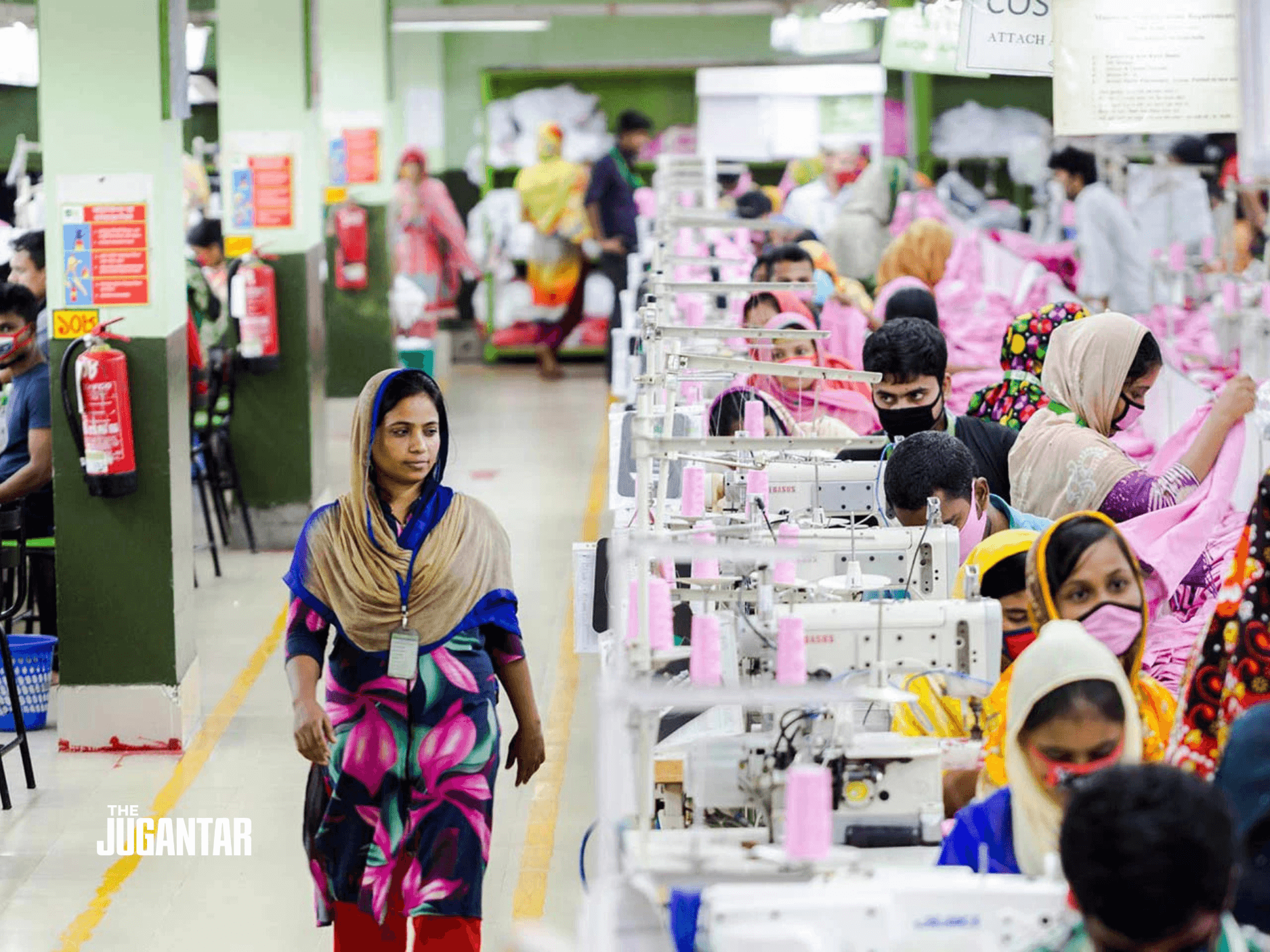
For more than two decades, Bangladesh’s economic identity has been synonymous with garments. The sector transformed a largely agrarian economy into one of the world’s leading apparel exporters. It generated employment at scale, especially for women, and integrated the country into global supply chains.
In 2026, the question is whether Bangladesh can evolve beyond that success.
The next phase of growth will depend not on abandoning garments, but on building around them. Diversification into higher-value manufacturing and services will determine whether Bangladesh sustains momentum or plateaus at middle-income status.
The Limits of Specialisation
Garments remain central to Bangladesh’s export earnings. The sector benefits from established supplier networks, skilled labour and preferential market access in Europe and North America.
Yet concentration carries risk. Demand cycles in advanced economies directly affect export volumes. Labour cost pressures gradually erode competitiveness. Compliance with environmental and safety standards requires continuous investment.
Moreover, value capture remains limited. Much of the higher-margin design and branding activity occurs abroad.
To increase resilience, Bangladesh must move up the value chain and broaden its industrial base.
Emerging Industrial Sectors
Electronics assembly has begun to gain traction. Domestic firms, often in partnership with foreign investors, are assembling consumer electronics and mobile devices for local and regional markets. Pharmaceuticals represent another area of potential strength, supported by a growing domestic healthcare market and export capacity.
Shipbuilding and light engineering also show promise, leveraging Bangladesh’s riverine geography and labour pool.
Scaling these sectors requires regulatory clarity, efficient ports and reliable energy supply. Recent infrastructure investments have reduced some bottlenecks, but further improvements are necessary to attract larger foreign direct investment inflows.
Diversification is less about ambition than execution.
The Role of Special Economic Zones
Bangladesh has expanded special economic zones to attract foreign investors. These zones offer tax incentives, simplified regulations and infrastructure support.
If managed transparently and integrated into national supply chains, they could accelerate industrial upgrading. However, governance standards must remain consistent to avoid regulatory fragmentation.
Investors seek predictability more than incentives.
Labour, Skills and Productivity
Bangladesh’s youthful workforce remains its primary asset. Literacy rates and female workforce participation have improved significantly over the past two decades.
Yet advanced manufacturing requires different skill sets from basic garment production. Technical training, engineering education and digital literacy must expand to support higher-value industries.
Investment in human capital will determine whether Bangladesh’s labour advantage persists.
Trade Integration and Regional Strategy
Bangladesh’s export model has historically been oriented toward Western markets. As regional trade deepens, integration with India and broader South Asia could diversify exposure.
Cross-border energy cooperation and logistics corridors may reduce costs. Participation in regional supply chains could strengthen resilience against global volatility.
Strategic geography provides options. Policy must convert them into advantage.
Currency and Macro Stability
Industrial upgrading requires macroeconomic stability. Exchange rate volatility and reserve pressures can deter long-term investment. Prudent fiscal management has historically distinguished Bangladesh among emerging markets.
Maintaining that discipline will be essential as diversification efforts intensify. Infrastructure expansion and industrial policy must be balanced against debt sustainability.
Credibility remains the foundation of transformation.
From Efficiency to Innovation
Bangladesh’s first phase of growth was built on efficiency: low labour costs, disciplined production and integration into global apparel supply chains.
The second phase demands innovation: product differentiation, technological adoption and branding capacity.
This transition will not occur overnight. It requires institutional reform, regulatory transparency and long-term investment in skills.
Yet the foundations exist. Industrial discipline, demographic strength and improving infrastructure provide a platform.
Bangladesh proved it could become a manufacturing success story. The next challenge is to become a diversified industrial economy.
The label “Made in Bangladesh” may soon signify more than garments. It may signal structural evolution.
Previous
Next