
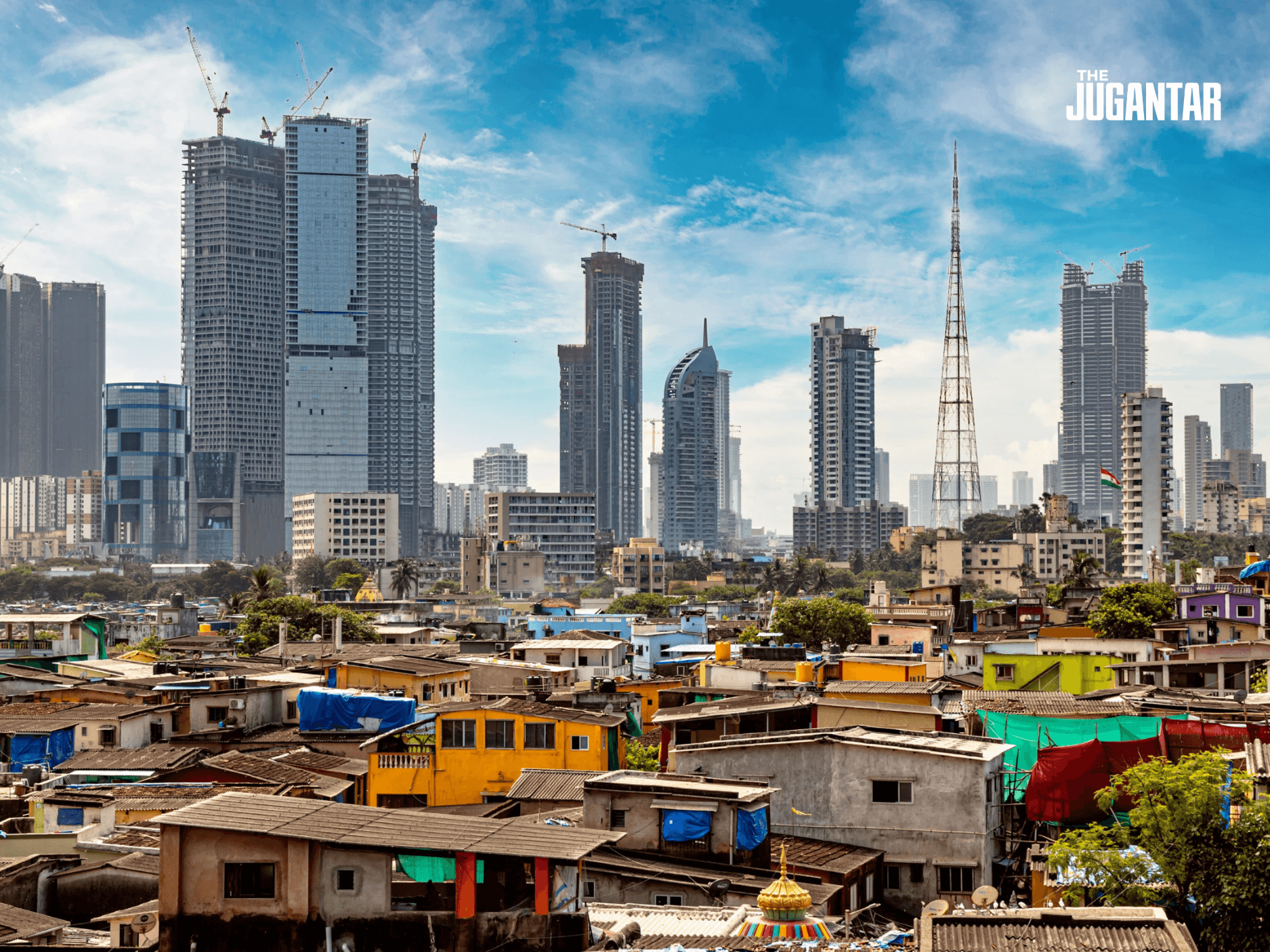
From Delhi to Dhaka, a region steps into strategic adulthood
For much of the past two decades, South Asia was described as a region of potential. The language was cautious. Growth was promising but uneven. Demographics were favourable but underleveraged. Politics were vibrant but unstable.
In 2026, that vocabulary is beginning to change.
The subcontinent enters the year with three reinforcing shifts: macroeconomic resilience, political recalibration, and geopolitical centrality. None is revolutionary on its own. Together, they signal a structural inflection.
Growth in a Slowing World
The global economy is decelerating. Advanced economies face stagnation risks. China’s structural slowdown continues to reshape supply chains. Europe remains constrained by energy and demographic pressures.
Against that backdrop, South Asia stands out.
Recent projections from multilateral institutions suggest that East and South Asia will outpace most other regions in 2026. India remains the principal engine, supported by sustained public capital expenditure, expanding manufacturing incentives and resilient domestic consumption. Infrastructure outlays remain elevated, reinforcing logistics, digital connectivity and energy capacity.
Bangladesh, though navigating political transition, continues to show export resilience beyond garments. Sri Lanka, emerging from crisis conditions, has stabilised macro fundamentals under IMF supervision. Even smaller economies such as Nepal and Bhutan are repositioning hydropower and tourism within broader regional supply chains.
The significance lies not in headline growth alone, but in relative performance. In a world where expansion is scarce, consistent growth confers bargaining power.
Political Competition, Institutional Continuity
South Asia’s politics remain competitive, often intensely so. Yet the dominant pattern in 2026 is procedural continuity rather than systemic rupture.
Bangladesh’s election has reconfigured domestic alignments but not derailed economic management. India’s federal churn continues to shape national discourse, with state-level politics influencing industrial and welfare policy in tangible ways. Pakistan’s institutional equilibrium remains delicate, but economic policy has shown greater continuity than in previous cycles of turbulence.
Sri Lanka’s reform trajectory, though contested domestically, has not reversed course.
This does not imply the absence of risk. Polarisation persists. Youth unemployment remains an underlying pressure point. Climate exposure threatens infrastructure and agriculture alike.
However, political systems across the region are proving more adaptive than fragile. Institutional durability, even when imperfect, is strategically valuable.
The Indo-Pacific Effect
If economics explains momentum, geopolitics explains leverage.
The Indo-Pacific has become the central theatre of twenty-first century competition. Supply chains, semiconductor access, maritime routes and defence partnerships converge across this geography. South Asia sits at its core.
India’s expanding defence and technology partnerships with the United States, Europe and Japan coexist with calibrated engagement with Russia and pragmatic trade ties with China. Bangladesh and Sri Lanka navigate similar balancing acts, leveraging infrastructure investment while diversifying external relationships. Pakistan continues to recalibrate its strategic posture amid economic constraints.
The region is not aligning ideologically. It is hedging strategically.
In a fragmented global order, middle powers that can engage multiple blocs gain negotiating advantage. South Asia increasingly fits that description.
The Productivity Question
Demography has long been cited as South Asia’s latent strength. In 2026, the central question is whether it can translate into productivity gains.
Digital public infrastructure in India has reshaped payments, identification and service delivery at scale. Fintech penetration across Bangladesh and Pakistan has expanded financial inclusion. Startup ecosystems, though less exuberant than in peak venture years, are more disciplined and increasingly integrated into global capital networks.
Artificial intelligence, automation and advanced manufacturing present both risk and opportunity. If workforce skilling keeps pace with technological adoption, the region’s demographic advantage may become measurable in output rather than merely projected in theory.
The productivity trajectory will determine whether South Asia sustains breakout status or plateaus.
Cultural Capital and Perception
Economic and geopolitical metrics alone do not shape global hierarchy. Perception matters.
South Asian cultural exports, from cinema to music to digital creators, have widened their reach beyond diaspora markets. Streaming platforms increasingly commission regional content for global audiences. Designers, authors and filmmakers operate with greater confidence in local narratives.
Soft power does not substitute for hard capability. But it reinforces it. A region that projects creative confidence signals broader institutional maturity.
A Structural, Not Cyclical, Moment
It would be premature to declare a transformation complete. Structural weaknesses persist. Climate shocks remain likely. External financial volatility could resurface. Domestic political tensions are never far from view.
Yet the convergence of growth resilience, institutional continuity, strategic leverage and cultural confidence suggests that 2026 is not merely a good year. It may be a formative one.
South Asia is no longer defined primarily by volatility or vulnerability. It is increasingly defined by agency.
The subcontinent has not escaped risk. But it has expanded its room for manoeuvre. In a fragmented global order, that may prove decisive.
Previous